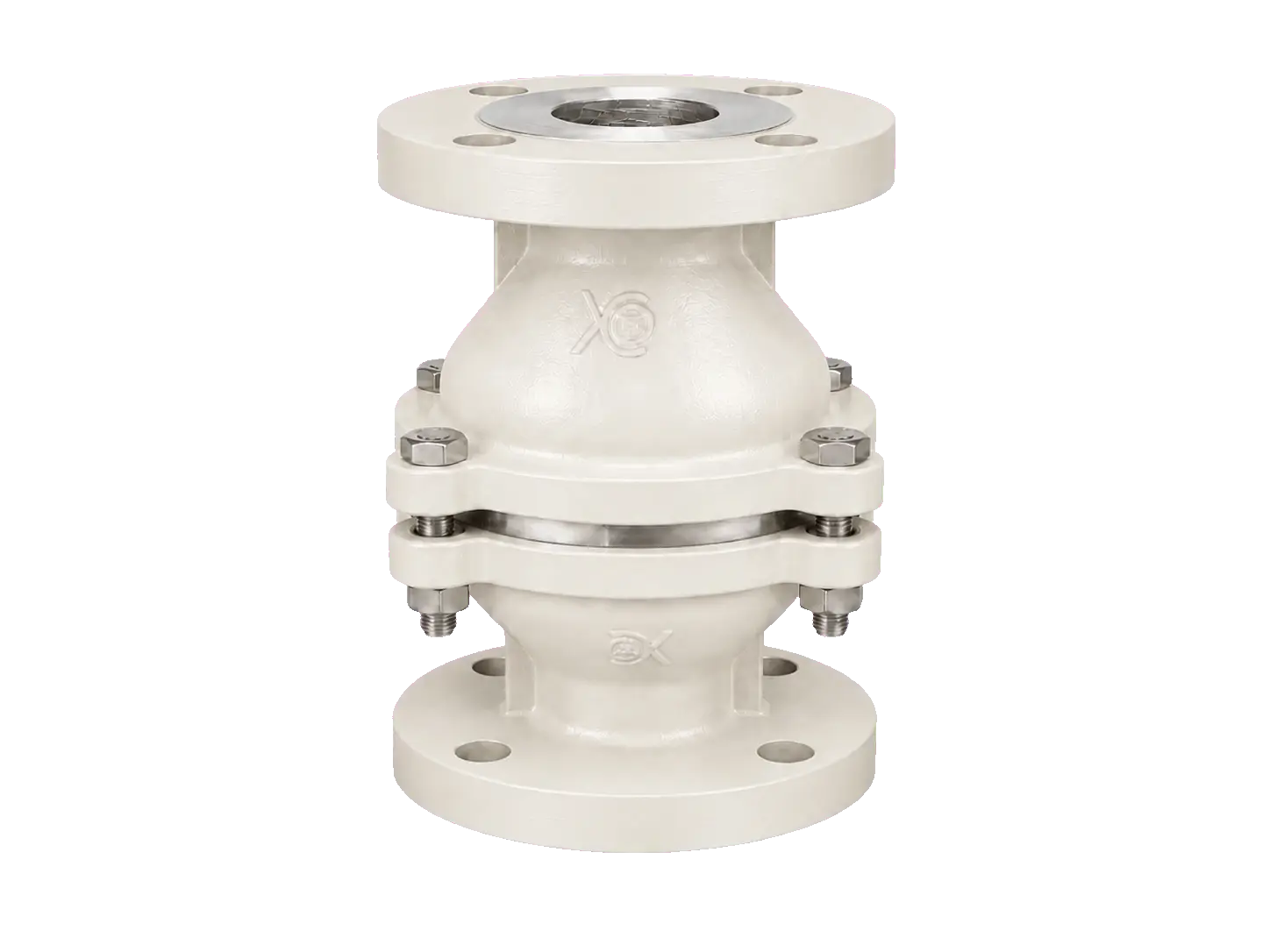
Industrial flame arresters for tank vents and process piping handling compatible flammable gases or vapours. Choose inline or end-of-line flame arrester configurations and suitable body / element materials for the application.
Flame Arresters are designed to prevent flame propagation through pipelines, vent lines and storage-tank breathing systems handling flammable gases or vapours.
Crimped ribbon and bird-mesh element options
Inline and end-of-line installation configurations
Flame Arresters are designed to prevent flame propagation through pipelines, vent lines and storage-tank breathing systems handling flammable gases or vapours.
The arrester uses a crimped ribbon or bird-mesh element to absorb and dissipate flame energy, helping stop the flame front from travelling further through the system.
Available in inline, end-of-line and breather-valve-combined configurations, the product can be supplied in multiple sizes, body materials and element materials. Carbon-steel, stainless-steel and PTFE-coated body options are available, with SS304, SS316 and Hastelloy C-276 flame-arresting elements for different process requirements.
How it works
Working Principle
Normal vapour passes through narrow passages in the metallic flame element. If a flame front reaches the element, heat is transferred into the metal matrix until the combustion temperature falls below the level required for propagation.
01
Normal vapour flow
Process vapour or vent gas passes through the arrester element during normal operation.
02
Flame enters the element
A flame front is divided into small channels formed by the wound crimped metal ribbon construction.
03
Heat is quenched
The metal absorbs and conducts heat away, reducing the flame temperature and stopping propagation to the protected side.
At a glance
Key Highlights
Crimped ribbon and bird-mesh element options
Inline and end-of-line installation configurations
Sizes from 1″ (DN25) to 20″ (DN500)
Design temperature up to 350°C
Carbon steel, stainless steel and PTFE-coated body options
SS304 / SS316 / Hastelloy C-276 element material options
Range summary
Technical Specifications
Values below summarise the product family. Open an individual product for its complete model and variant data.
Size
1″ (DN25) to 20″ (DN500)
Design Pressure
Up to 15 barg
Design Temperature
Up to 350°C
Pressure Rating
Class 150; higher ratings available on request
End Connection
Flanged / Threaded / Tri-Clover
Body MOC
A216 WCB / CF8 / CF8M / CF3 / CF3M / PTFE-coated
Element Type
Crimped Ribbon / Bird Mesh
Element MOC
SS304 / SS316 / Hastelloy C-276
Typical use
Applications
Storage tank vent and breather lines
Fuel, solvent and hydrocarbon vapour lines
Chemical and petrochemical process systems
Biogas and combustible gas pipelines
Ventilation lines handling flammable vapours
Protection of equipment from flame propagation
End-of-line venting and inline flame protection
Selection confidence
Why Choose Kuncham Controls?
Multiple installation types
Inline, end-of-line and combined breather-valve configurations cover pipeline and tank-vent duties.
Broad size range
Standard sizes from 1 inch to 20 inches support small vent lines and larger process connections.
Material selection
Carbon steel, stainless steel and PTFE-coated body options can be combined with SS304, SS316 or Hastelloy C-276 elements.
Passive protection
The flame-arresting element operates without an external power supply or moving actuation mechanism.
Support
Questions & Answers
What is the purpose of a Flame Arrester?
It is designed to help stop flame propagation through a compatible vent or process line by quenching the flame within the metallic element.
What is the difference between inline and end-of-line types?
An inline arrester is installed within piping, while an end-of-line arrester is installed at a vent termination exposed to atmosphere.
Which element types are available?
Crimped-ribbon and bird-mesh element constructions are available according to the application.
Which materials are available?
Body options include carbon steel, stainless steel and PTFE-coated construction. Element options include SS304, SS316 and Hastelloy C-276.
What information is needed for selection?
Provide the service, gas or vapour, line size, installation position, pressure, temperature, connection, body and element materials, and applicable site safety requirements.