Hydrostatic and differential-pressure level transmitters for continuous liquid level measurement in water, wastewater, oil, chemical and process tanks. Configure direct, top, side, threaded, flanged, sanitary, flush-diaphragm or remote-seal mounting with 4-20 mA output and optional indication.
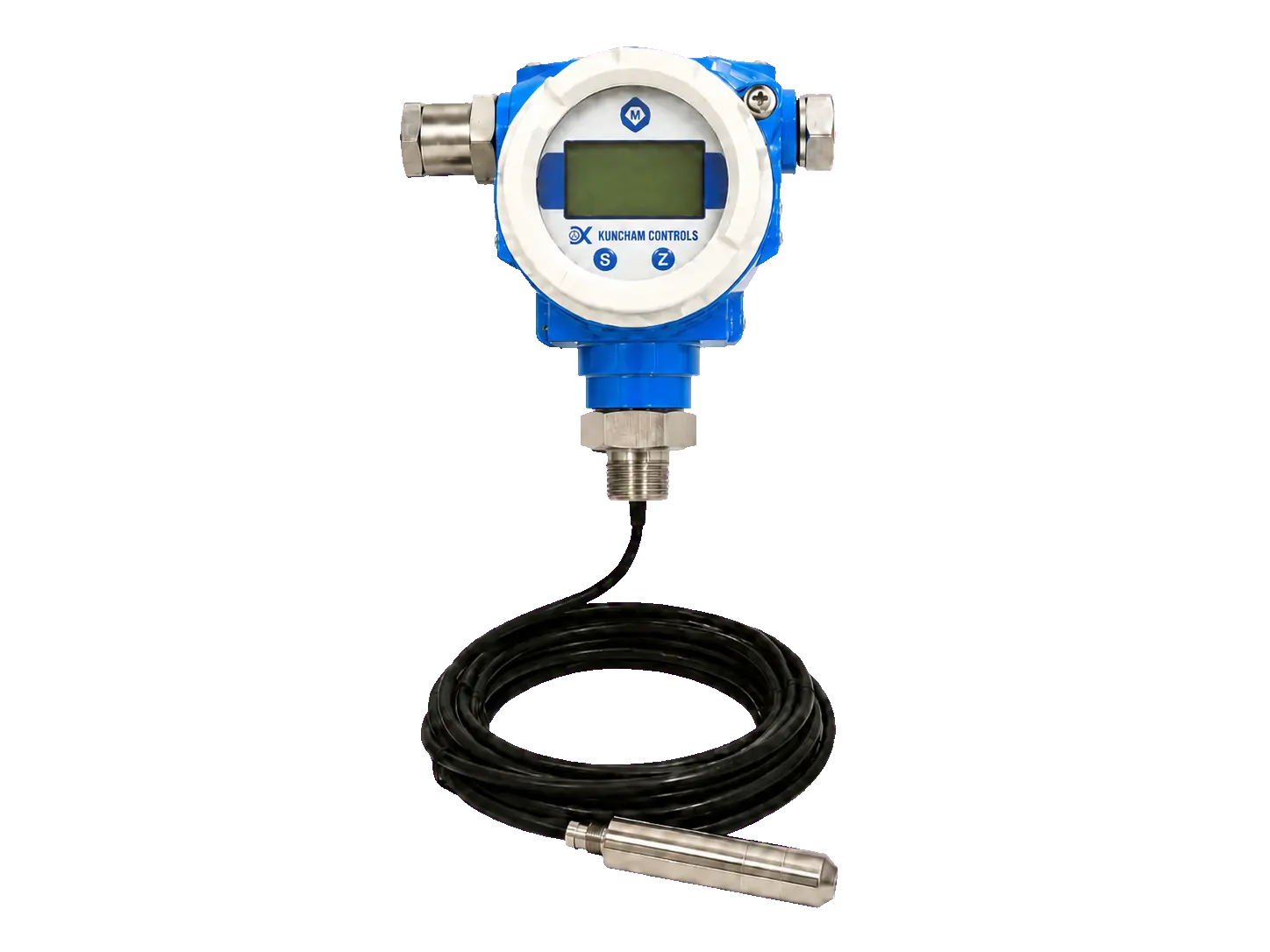
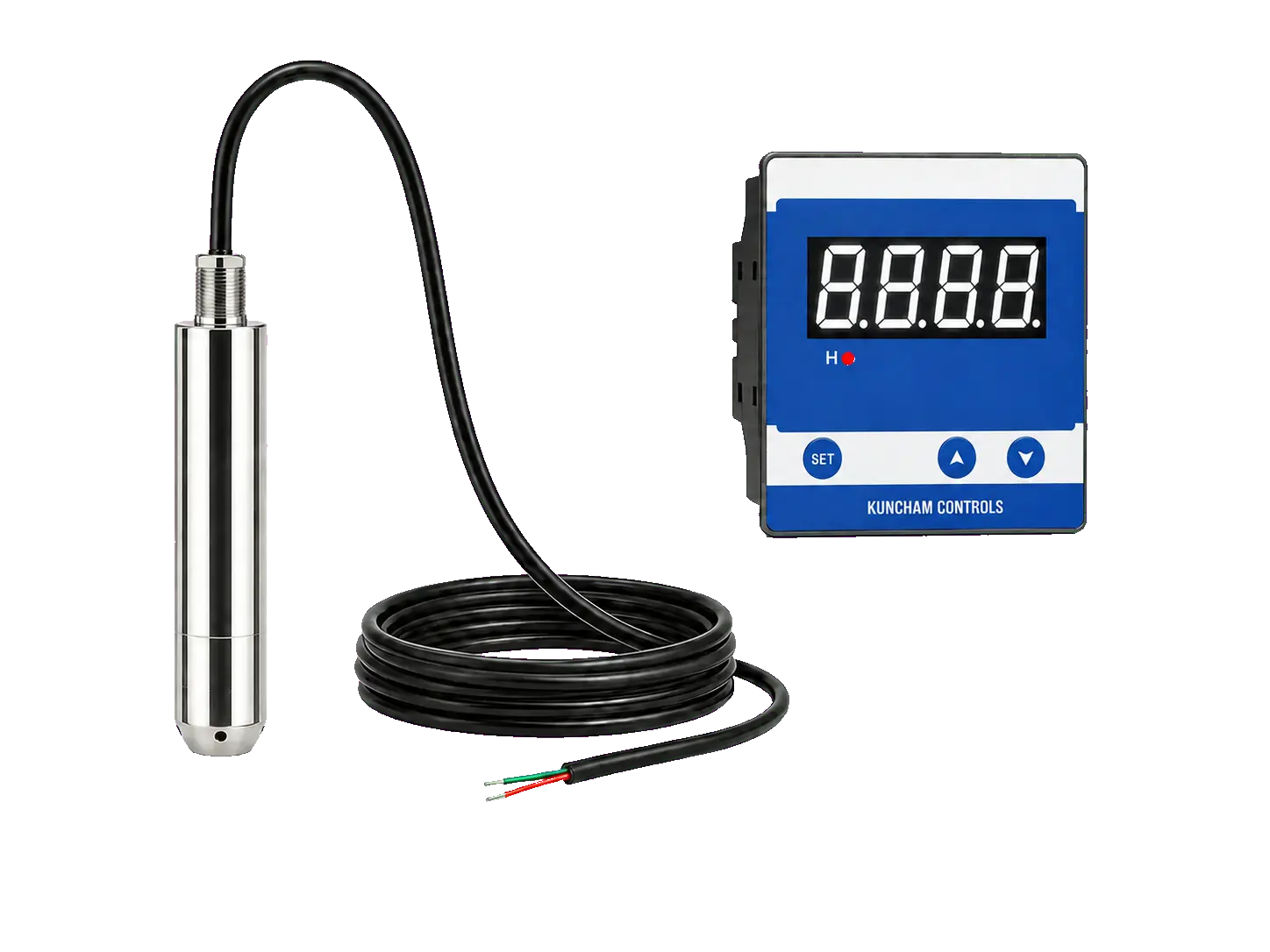
Hydrostatic Level Transmitters are designed for continuous liquid-level measurement by directly sensing hydrostatic pressure at the bottom of a tank, sump, reservoir or well.
Continuous hydrostatic level measurement up to 100 m
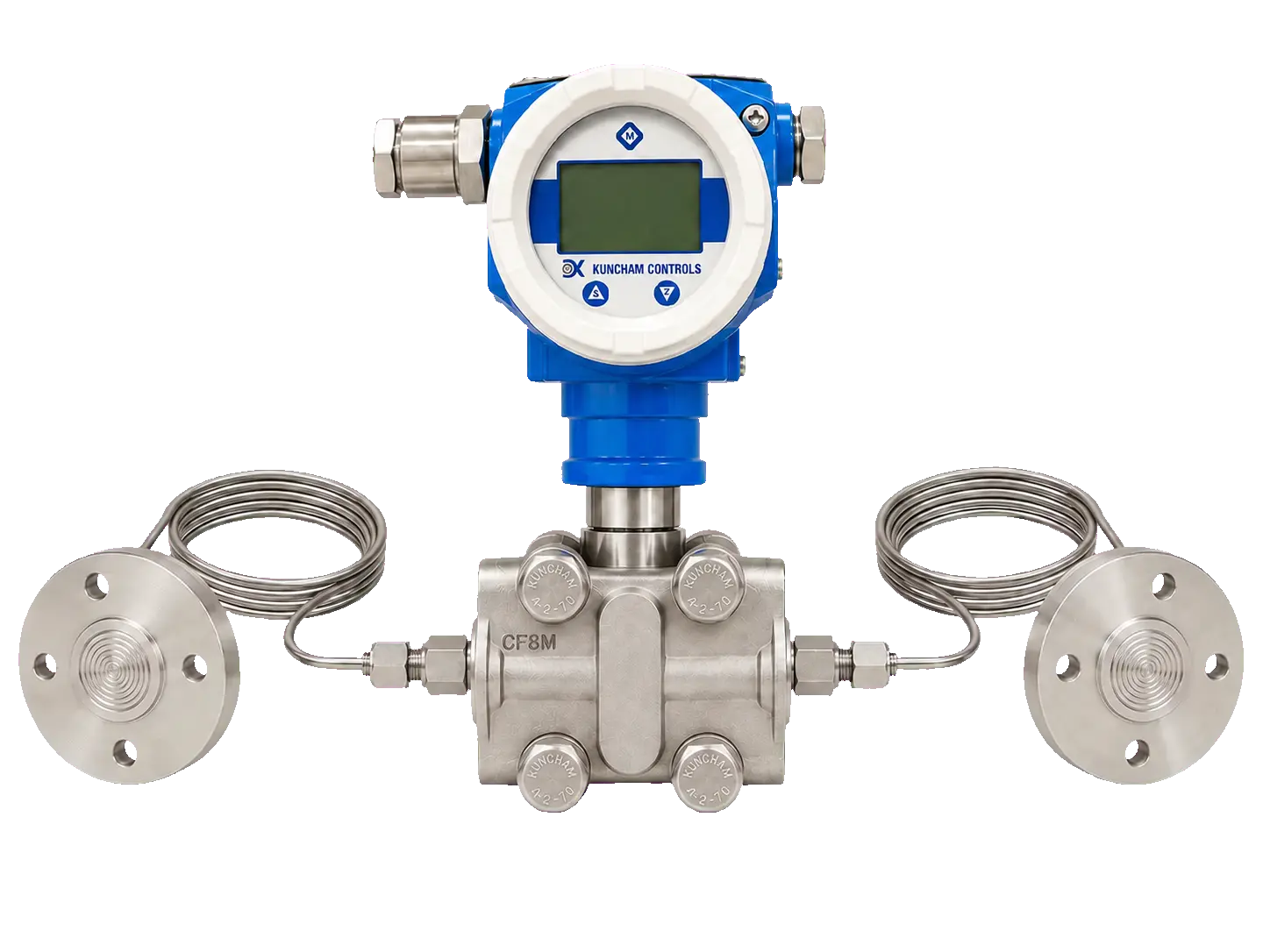
Closed-Tank Level Transmitters are designed for continuous liquid-level measurement in pressurised and sealed vessels using differential pressure measurement.
Differential-pressure level measurement for closed and pressurised tanks
Tank-pressure compensation using high- and low-pressure connections
Kuncham Controls level transmitters provide continuous liquid-level measurement for open tanks, reservoirs, sumps and closed or pressurised vessels. The product range includes hydrostatic transmitters with and without local indication, plus differential-pressure instruments for closed-tank level measurement.
Top-mounted, side-mounted, screwed, flanged, flush-diaphragm, sanitary and remote-seal arrangements are available across the range. The correct instrument is selected according to tank type, liquid density, measuring range, connection, media compatibility and indication requirement.
How it works
Working Principle
Hydrostatic level is determined from the pressure produced by the liquid column. For closed tanks, a differential-pressure arrangement compensates the gas or vapour pressure above the liquid.
01
Liquid-column pressure
The sensor measures pressure created by the liquid height, density and gravity at the measuring point.
02
Tank-pressure compensation
In a closed tank, high and low connections or remote seals cancel the vessel pressure above the liquid.
03
Level indication and output
The measured pressure is calibrated as level and transmitted by 4-20 mA, with display and communication options by model.
At a glance
Key Highlights
Open-tank and closed-tank level measurement options
Measurement ranges up to 100 m
Submersible hydrostatic and local-indicator configurations
4–20 mA / 1–5 V / 2–10 V outputs on hydrostatic models
HART / RS485 Modbus RTU options on indicator and closed-tank models
Top, side, direct, threaded, flanged, sanitary, flush-diaphragm and remote-seal configurations
Range summary
Technical Specifications
Values below summarise the product family. Open an individual product for its complete model and variant data.
Hydrostatic or differential pressure, according to tank type
Range
Up to 100 m
Accuracy
±2% FSD or better on hydrostatic models; ±0.5% FSD or better on closed-tank model
Output
4–20 mA / 1–5 V / 2–10 V on hydrostatic models; 4–20 mA on closed-tank model
Communication
HART / RS485 Modbus RTU on selected indicator models
Connections
Direct / threaded / flanged / Tri-Clamp / flush diaphragm / remote seal
Materials
SS304 / SS316 / SS316L / Hastelloy C / Tantalum / PTFE-coated, according to configuration
Indicator Enclosure
Flameproof, IP67 / Ex d IIC T6 Gb on Hydrostatic Level Indicator Transmitter
Typical use
Applications
Water, effluent and chemical tanks
Oil, fuel and utility reservoirs
Sumps, wells and open storage tanks
Pressurised process vessels
Boiler drums, reactors and autoclaves
Food, dairy and pharmaceutical vessels
Selection confidence
Why Choose Kuncham Controls?
Open and closed tanks
The range covers straightforward hydrostatic duties as well as pressurised vessels requiring differential-pressure compensation.
Flexible mounting
Top, side, direct, threaded, flanged, sanitary, flush-diaphragm and remote-seal options fit varied vessel layouts.
Local or remote reading
Select local LCD indication, direct 4-20 mA transmission or a remote panel indicator according to operating needs.
Application-based selection
Kuncham assists with density, range, mounting, seal, material and tank-pressure considerations before selection.
Support
Questions & Answers
Which level transmitter is suitable for an open tank?
Use a Hydrostatic Level Transmitter when only a remote signal is needed, or a Hydrostatic Level Indicator Transmitter when local LCD indication is also required.
Which transmitter is suitable for a closed or pressurised tank?
Use the Closed-Tank Level Transmitter. Its differential-pressure arrangement compensates the pressure above the liquid so the liquid-column level can be measured.
Does liquid density affect hydrostatic level measurement?
Yes. Hydrostatic pressure depends on liquid height and density, so the operating density must be considered during calibration and selection.
Which connection is suitable for viscous or sticky liquids?
A flush-diaphragm configuration reduces cavities where viscous, sticky or sediment-bearing media can accumulate.
What information is needed for selection?
Provide tank type and height, liquid and density, operating pressure and temperature, mounting position, process connection, wetted material, output and display requirement.